Last updated: 3 August 2026
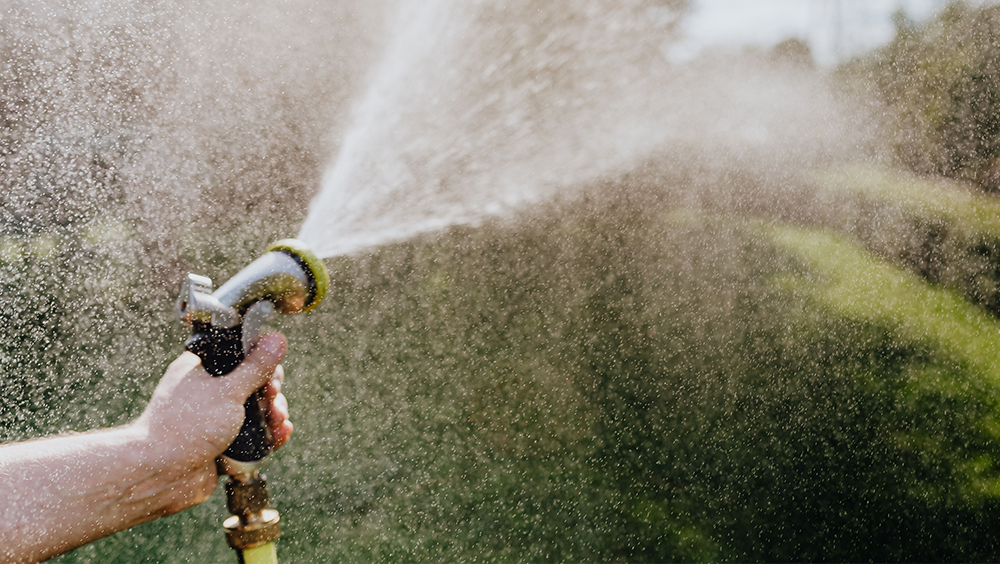
After an exceptionally dry summer, drought conditions and hosepipe bans are now affecting large parts of the UK.
The latest Environment Agency update states that more than half of England has entered drought status. England had received just 7% of its long-term average July rainfall by 30 July, while national reservoir storage had fallen to 72% (around 9.5% below the seasonal average).
The East Midlands was moved into prolonged dry weather status on 29 July, alongside Lincolnshire and Northamptonshire. This means that even households outside an active hosepipe ban should consider reducing unnecessary water use while conditions remain dry. [Source: Environment Agency]
In this guide, we explain:
- Where hosepipe bans are currently in force
- What you can and cannot do during a ban
- How to use less water without changing your normal routine
- Why tap water can occasionally taste or smell different during hot weather
- How household filtration can improve taste without relying on bottled water
Why is the UK experiencing drought conditions?
Drought develops when prolonged periods of low rainfall reduce the amount of water stored in rivers, reservoirs and underground sources.
The Environment Agency has reported falling river flows, groundwater levels and reservoir storage across much of England. High temperatures also increase evaporation while simultaneously increasing household demand for activities such as watering gardens, filling paddling pools and washing cars.
Some water providers have experienced demand increases of up to one-third during periods of extremely hot weather.
Thames Water reported that customers across London and the Thames Valley were using an additional 100 million litres of water every day during July. At times, water was being used faster than it could be treated and moved through parts of the network. [Source: Thames Water]
Where are hosepipe bans currently in force?
As of 3 August 2026, Temporary Use Bans (hosepipe bans) have been introduced for some or all customers supplied by the following water companies:
Affinity Water
Restrictions apply to Affinity Water’s Central region, covering Bedfordshire, Berkshire, Buckinghamshire, Hertfordshire, Surrey and parts of London and Essex.
The restrictions came into force on 10 July 2026.
Anglian Water
Restrictions apply across the Anglian Water region, excluding Hartlepool.
The ban came into force on 11 July 2026. This is particularly relevant to parts of the East Midlands that receive their drinking water from Anglian Water.
Cambridge Water
Restrictions apply across the whole Cambridge Water supply region.
The ban came into force on 17 July 2026.
Essex & Suffolk Water
Restrictions apply to household customers across the company’s entire supply area.
The ban came into force on 3 August 2026.
Southern Water
Restrictions apply to customers in Hampshire and the Isle of Wight.
The ban came into force on 10 July 2026.
South East Water
Restrictions initially applied to customers in Kent before being extended to the remainder of the South East Water supply region.
Company wide restrictions were in force by 25 July 2026.
South West Water
Restrictions apply to customers in Mid Devon and parts of East Devon and Dorset.
The ban came into force on 14 July 2026.
Thames Water
Restrictions apply to all customers whose drinking water is supplied by Thames Water. This includes most of Greater London, the Thames Valley, Luton, Surrey, Gloucestershire, north Wiltshire and parts of Kent.
The company wide ban came into force on 23 July 2026.
Dŵr Cymru Welsh Water
Restrictions apply across mid and south Ceredigion, along with parts of north Pembrokeshire and north Carmarthenshire.
The ban came into force on 19 July 2026.
Hosepipe restrictions can change quickly. Always check the latest information directly with the company that supplies your drinking water.
What does a hosepipe ban prevent you from doing?
A Temporary Use Ban generally prevents domestic customers from using a hosepipe, sprinkler or pressure washer to:
- Water a garden, lawn or allotment
- Wash a private car, van, motorbike or caravan
- Clean patios, paths, driveways, decking or external walls
- Fill or top up a paddling pool
- Fill or top up a swimming pool or hot tub
- Clean windows using a hosepipe
- Operate a sprinkler connected to the mains supply
- Fill or maintain decorative ponds and water features, unless an exemption applies
Buckets and watering cans are generally still permitted, although customers should check their supplier’s full rules.
Some exemptions may apply for vulnerable customers, health and safety requirements, recently planted trees, food crops, animal welfare and approved drip-irrigation systems.
Can you be fined for breaking a hosepipe ban?
Water companies normally focus on helping customers understand and follow the restrictions. However, repeatedly or deliberately breaking a Temporary Use Ban could result in prosecution and a fine of up to £1,000. [Source: Ofwat]
How to use less water without changing your lifestyle
The biggest improvements often come from using water more precisely and avoiding waste.
1. Wash your car with a bucket and sponge
A hosepipe can release a large amount of water in a very short time, much of which runs directly onto the road or into a drain.
Instead:
- Fill one bucket with car shampoo and water
- Use a second bucket for rinsing your sponge or wash mitt
- Clean the car in sections
- Use a separate cloth and glass cleaner for windows
- Consider a rinseless car-cleaning product where suitable
[Source: Anglian Water]
2. Keep plants healthy with a watering can
A hosepipe often waters the surrounding soil, paths and weeds as well as the plant itself. A watering can allows you to direct water exactly where it is needed.
For the best results:
- Water directly around the base of each plant
- Prioritise pots, hanging baskets and newly planted areas
- Focus on plants showing signs of stress
- Water early in the morning or later in the evening
- Avoid watering during the hottest part of the day
- Use mulch to help the soil retain moisture
- Collect rainwater in a water butt, bucket or suitable container
Anglian Water advises that watering early or late gives water more time to soak into the soil before it evaporates. It also recommends focusing on the plants that need water most.
[Source: Anglian Water, “In the garden”.]
3. Make showers slightly shorter
You do not need to stop showering or rush through your normal routine.
Reducing the average shower by just two minutes could save approximately 20 litres of water per person each day. It can also reduce the energy used to heat the water.
For a family of four, that small change could save around 80 litres a day.
[Source: Thames Water]
Try putting on a four or five-minute song and finishing your shower before it ends.
You can also turn the shower off temporarily while applying shampoo or shower gel.
4. Turn taps off while brushing your teeth
A running bathroom tap can use up to nine litres of water every minute.
Turning it off while brushing your teeth is one of the easiest changes to make because it does not affect the result at all.
The same principle applies when:
- Shaving
- Washing your face
- Soaping your hands
- Scrubbing dishes
- Cleaning vegetables
[Source: Thames Water, “Water saving”.]
5. Check for a leaking toilet
Not every toilet leak is easy to see or hear. Water can flow slowly down the back of the bowl without making an obvious noise.
According to Thames Water, a leaking toilet can waste between 200 and 400 litres of water every day, which is as much water as some families use in an entire day.
To check your toilet:
- Wait at least 20 minutes after flushing.
- Dry the back of the toilet bowl with tissue.
- Place a fresh piece of tissue against the back of the bowl.
- Check whether it becomes wet without the toilet being flushed.
If water is still entering the bowl, the flush valve, inlet valve or seal may need attention.
6. Only run full washing-machine and dishwasher loads
Running one full load is normally more efficient than running two partially filled loads.
Wait until your washing machine or dishwasher is full, but avoid overfilling it to the point that clothes or dishes cannot be cleaned properly.
Where available, use an eco programme. These cycles take longer but reduce water and energy consumption.
7. Collect water while waiting for it to warm up
When waiting for a shower or kitchen tap to become warm, collect the initial cold water in a bucket or bowl.
This clean water can then be used for:
- Watering plants
- Filling a pet’s water bowl
- Cleaning floors
- Rinsing cloths
- Washing outdoor tools
You can also reuse suitable water from washing fruit and vegetables on garden plants.
Avoid using water containing bleach, strong cleaning chemicals, excessive salt or grease on plants.
8. Use the correct amount of water when cooking
Many people use more water than necessary when boiling vegetables, pasta or rice.
Use a suitably sized pan and measure the water rather than filling it automatically. Keeping a lid on the pan can also reduce evaporation and help the water heat more quickly.
9. Report visible leaks
Hot, dry conditions can cause the ground to move, placing additional stress on underground water pipes.
If you notice water running from the pavement, an unusually wet patch during dry weather or a persistent stream along the road, report it to the relevant water company.
Repairing leaks across the supply network plays a major role in protecting water resources.
Can drought affect the taste or smell of tap water?
Some households have contacted East Midlands Water to explain that their tap water tastes or smells slightly different during prolonged periods of hot weather.
Approximately half of the UK’s drinking water originates from rivers and reservoirs. During summer, warmer source water can develop natural compounds that produce an earthy or musty taste.
A common cause is naturally occurring algae in reservoirs. The Drinking Water Inspectorate states that conventional treatment is effective at removing algae and their toxins. However, naturally produced compounds associated with algae can occasionally leave an earthy or musty taste or smell. [Source: Drinking Water Inspectorate]
Water companies may also adjust how they use or blend different water sources during periods of high demand. Because water from reservoirs and underground sources has varying natural characteristics, some people are noticing a change in taste, smell and appearance.
A chlorine taste or smell can also occur. Chlorine is used to disinfect drinking water and keep it hygienic while it travels through the supply network.
Normal chlorine levels should be low, but some people are more sensitive to its taste and odour than others.
[Source: Drinking Water Inspectorate, “Taste and Odour in Drinking Water”.]
Does a different taste mean the water is unsafe?
Not necessarily.
An earthy, musty or chlorine taste does not automatically mean the drinking water is unsafe. Public drinking water continues to be treated, monitored and tested against regulated quality standards.
However, contact your water company if:
- The change is sudden and particularly strong
- The water becomes unpleasant or undrinkable
- There is a petrol, fuel, sewage or chemical smell
- The taste or smell affects several taps
- Neighbouring properties have the same problem
- The problem continues after flushing the cold kitchen tap
The Drinking Water Inspectorate recommends checking more than one tap and asking neighbours whether they have noticed the same issue. Persistent or serious concerns should be reported to the water supplier.
Can a water filter improve drought-related taste and odour?
The right filtration system reduces chlorine and other substances associated with unwanted taste and odour. This can make tap water more enjoyable to drink and reduce the temptation to switch to single-use bottled water whenever the taste changes.
It is important to choose a system based on where you want filtered water.
Filtered drinking water from the kitchen tap
The Eco Filters System 40 is an under-sink water filter designed for drinking and cooking water at the kitchen tap.
It offers:
- Up to 40,000 litres of filtration
- A replacement interval of up to three years
- Reduction of chlorine and unwanted taste and odour
- Filtered water directly from the tap
- No filter jug taking up space in the fridge
- Reduced reliance on bottled water
- A compact and easy to fit design
This is an affordable and practical option for households wanting better tasting water for drinking, hot drinks and cooking.
Filtered water throughout the whole house
The BT65 F15 Whole House Water Filter is installed on the incoming mains supply, filtering water before it reaches the taps, showers, baths and connected appliances around the home.
The BT65:
- Filters every tap and shower from one central system
- Removes chlorine-related taste and odour
- Reduces sediment and suspended particles
- Uses silver-impregnated coconut shell activated carbon
- Retains naturally occurring dissolved minerals
- Provides up to 650,000 litres or three years of filtration
- Is suitable for many homes with two to three bathrooms
Explore the BT65 whole-house filter for cleaner, better-tasting water from every tap.
What about water softeners?
Water filters and water softeners perform different jobs.
A filter is primarily used to improve drinking-water taste and reduce substances such as chlorine and sediment. A water softener removes the hardness minerals responsible for limescale.
During a period of drought, households considering a softener should look for an efficient meter-controlled system rather than an older timer-controlled design.
The EMS10 Eco Premier measures household water usage and regenerates when required instead of simply operating on a fixed schedule. This optimises its water and salt consumption while providing protection from limescale.
Frequently asked questions
Is the East Midlands currently in drought?
As of the Environment Agency update published on 31 July 2026, the East Midlands is classed as being in prolonged dry weather rather than drought.
However, drought status applies to neighbouring areas, and Anglian Water has introduced hosepipe restrictions across its region. Some East Midlands properties are supplied by Anglian Water, so customers should check their individual supplier.
[Source: Environment Agency, “Dry weather and drought in England: 24 to 30 July 2026”; Water UK, “Hosepipe bans FAQs”.]
Can I use a watering can during a hosepipe ban?
Watering cans and buckets are generally permitted because they allow water to be directed more carefully.
Some exemptions may also apply to newly planted trees, food crops and approved drip-irrigation systems. Always check the exact terms published by your supplier.
Can I wash my car with a bucket?
In most affected areas, you can wash a private vehicle using a bucket and sponge. The restriction normally relates to using a hosepipe, pressure washer or similar mains-connected equipment.
Can I fill a paddling pool with buckets?
Some suppliers’ rules may technically permit filling certain items using handheld containers, but this can still consume a significant amount of drinking water.
We currently recommend to check your supplier’s restrictions and avoid unnecessary filling or topping up.
How long will the hosepipe bans last?
There is no single end date.
Water companies review rainfall, reservoir storage, groundwater, river flows, forecasts and environmental conditions. Restrictions are normally lifted when water resources have recovered sufficiently.
Why does my tap water taste earthy or musty?
Warm summer conditions can encourage natural algal activity in rivers and reservoirs. Compounds released by algae can create an earthy or musty taste, even after the algae itself has been removed during treatment.
According to the Drinking Water Inspectorate, these taste and odour compounds do not normally have a health impact.
[Source: Drinking Water Inspectorate, “Algae and Cyanobacteria in Water”.]
Will a water filter reduce chlorine taste?
Activated carbon filtration can reduce chlorine and chlorine-related taste and odour.
The right system depends on whether you want filtered water from one drinking-water tap or filtration throughout the whole property.
Use less water without compromising your home
The most effective water-saving changes are often the easiest:
- Turn taps off when they are not actively being used
- Reduce shower time slightly
- Check toilets and taps for leaks
- Run full washing machine and dishwasher loads
- Use a bucket instead of a hose
- Water plants directly with a watering can
- Collect and reuse suitable water
- Keep chilled tap water in the fridge
These measures help reduce pressure on local supplies without requiring households to give up normal drinking, cooking, washing and hygiene.
Enjoy tap water that tastes better
If seasonal changes have made the taste or smell of your tap water more noticeable, East Midlands Water can help you choose the right treatment system for your home.
Choose the System 40 for long-lasting filtered drinking water from your kitchen tap, or the BT65 for filtration throughout the whole property.
Explore our water filters today, use our Find the Right System guide or call East Midlands Water Company on 0116 276 3334 for straightforward advice from our water-treatment specialists.
SOURCES


Commenta
Questo sito è protetto da hCaptcha e applica le Norme sulla privacy e i Termini di servizio di hCaptcha.